
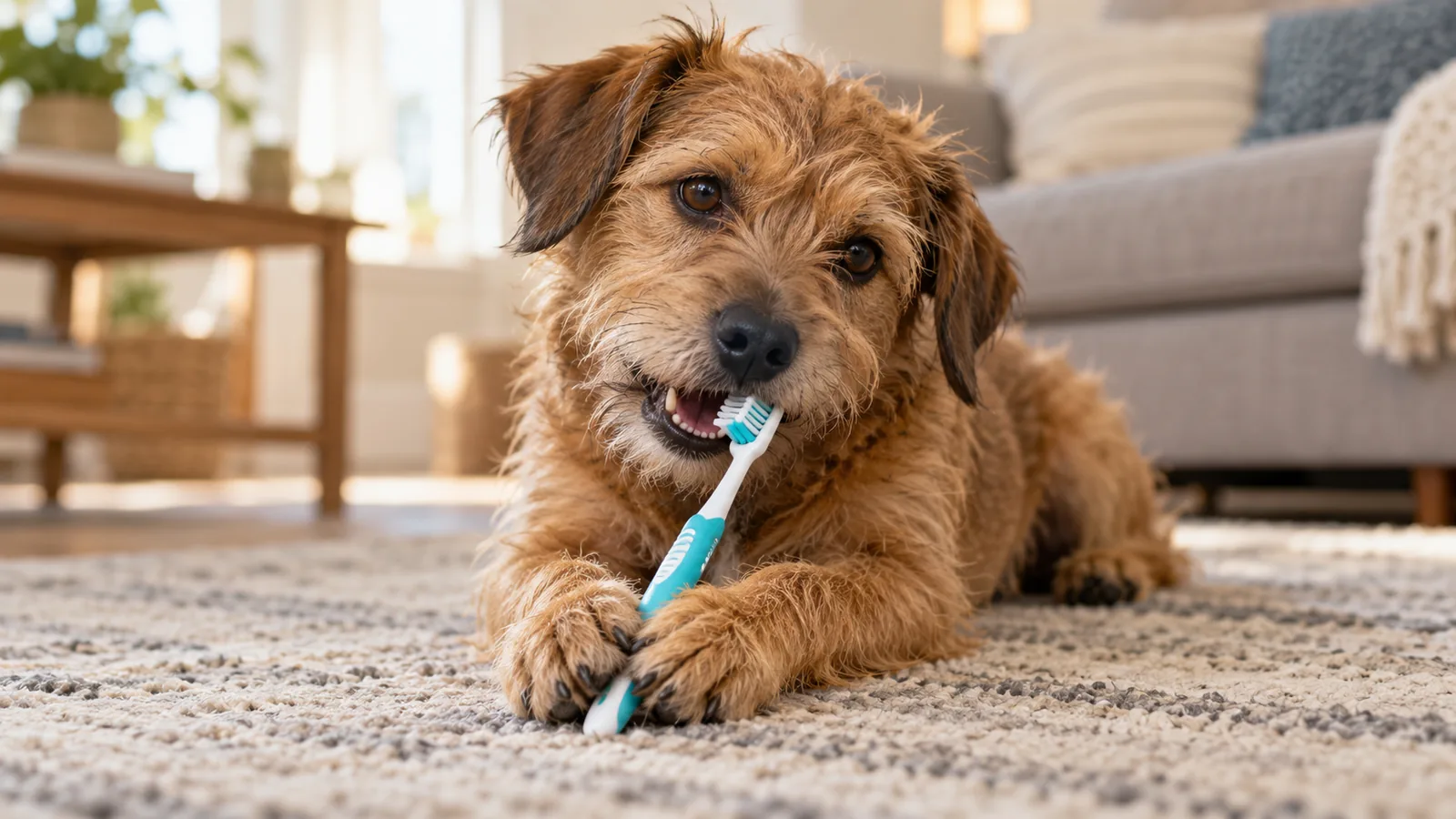
A brush and pet toothpaste sit in a class of their own, because physically scrubbing plaque off the tooth is what keeps it from hardening into tartar, and no chemical fully matches that. Dental wipes and chews come close when they are used daily, which makes them the honest pick for a cat or a dog who will not accept a brush. Water additives, gels, and sprays are real products rather than placebos, but they earn their money alongside mechanical care instead of in place of it, since an intact layer of plaque blocks them from reaching the gum tissue. Nothing sold for home use takes off tartar once it has hardened, so put the money toward the two or three tools you will actually reach for every day.
Bring the products you already own to your next visit and we will tell you which ones are earning their place and which ones are just taking up counter space. Valley Center Veterinary Clinic is an AAHA-accredited hospital, and our dental care for dogs and cats covers what nothing on a shelf can reach: a full oral exam, scaling below the gum line, and digital X-rays of the roots, plus coaching on brushing technique and which chews are worth buying. We will walk you through what we are seeing and why it matters, with the cost laid out before anything is scheduled, and help you build a routine that works. If the gums look red, the breath has turned bad, or tartar is creeping back over the molars, get your pet on our schedule.
Brushes, Wipes, and Gels: Start Here
- Brushing is the one home tool that physically lifts plaque off the tooth, and in studies nothing else matches it.
- Combinations beat single products: a brush or a wipe paired with a chew or an additive does more than either alone.
- Nothing sold for home use removes hardened tartar; that's the job of a cleaning under anesthesia.
- Consistency matters more than brand, and the VOHC seal separates a tested product from a packaging promise.
How Does Plaque Turn Into a Real Dental Problem?
Plaque, a sticky film of bacteria, rebuilds on the tooth within hours of a cleaning and mineralizes into tartar within a couple of days. The inflammation that follows works its way below the gumline, where periodontal disease destroys the bone and ligament holding the tooth in place.
A red, puffy margin along the gum is gingivitis, the early stage, and it reverses with a cleaning and daily home care. Once infection reaches bone, that loss doesn't come back: teeth loosen, roots abscess, and many pets start chewing on one side or leaving the dry food in the bowl. Heavy dental disease is also linked to strain on the heart, kidneys, and liver, since an inflamed mouth pushes bacteria into the bloodstream with every chew. We check gum margins at every wellness exam, or as part of a personalized wellness plan, because inflammation caught at the red-and-puffy stage is still simple to treat.
Is Brushing Really Worth the Fight?
Brushing is worth the fight, because bristles do what no gel, additive, or chew can, and for many dogs and cats it's a shorter fight than you'd expect: a few weeks of short sessions, each one ending with a treat before your pet has had enough.
How Often Does Brushing Have to Happen?
Brushing has to happen daily, or every other day at a minimum, because the film starts rebuilding the moment you stop. Frequency is where many families lose the benefit: in studies, pets whose teeth were brushed every other day carried measurably less plaque and tartar after several months, while pets brushed once a week showed no meaningful difference.
How Do You Get a Dog or Cat to Accept a Brush?
Getting a dog or cat to accept a brush works best in stages, starting with your hands rather than the brush.
| Stage | What it looks like |
| Hands around the muzzle | Touch the lips and muzzle, reward, and stop there |
| One finger on the gums | A single slow pass along the outside of the canines |
| Paste on your fingertip | Let your pet lick it off, then rub a little onto the teeth |
| Bristles, then the whole mouth | A few seconds on the front teeth, working back to every outer surface |
Never use human toothpaste: a pet swallows every bit of it, and it carries fluoride in amounts meant to be spat out plus, in many brands, xylitol, which is toxic to dogs. Use a pet-formulated or enzymatic paste instead, in a poultry or malt flavor your pet likes.
Brushing a dog's teeth works best with the bristles angled toward the gumline at about 45 degrees and most of the effort on the outer surfaces of the canines and cheek teeth, where plaque piles up fastest. Brushing a cat's teeth is a different job: a small soft brush or a finger brush, an approach from the side rather than over the head, and sessions measured in seconds per side.
When brushing stalls, the reason is usually one of these:
- A first session that ran too long.
- A paste flavor your pet dislikes.
- Scrubbing hard enough to make the gums sore.
- Quitting when they pull away instead of backing up a stage.
If none of that turns it around, schedule a visit at our Valley Center hospital and we'll show you the grip and the angle.
Can a Dental Diet or a Daily Chew Do the Job Instead?
A dental diet or a daily chew helps, and for a cat or dog who won't allow a brush a dental food is the best swap available, but neither lifts plaque the way bristles do. Dental diets work two ways: some coat the kibble with an agent that interferes with tartar formation, and some rely on the size and fiber structure of the piece. In one feline study, a large fibrous dental kibble built to shear against the tooth as it breaks produced less gingivitis and less tartar than the other formulations tested.
Which chew you buy matters as much as how often you give it, because the hard ones break teeth. In trials, a dental chew once a day lowered plaque and calmed gum inflammation measurably more than skipping the chew. Antlers, hooves, cooked bones, and rock-hard nylon are the chew items that fracture teeth most often, and the tooth that usually breaks is the large upper chewing tooth at the back.
- Check how hard it is: a chew that won't dent or flex under firm pressure is harder than the tooth and can crack one. Teeth that are already worn or cracked break more easily, and we look for those at every wellness visit.
- Match the size: a chew small enough to swallow whole can lodge in the gut, and one gone in three bites never touched the plaque.
- Stay in the room: watch while your pet chews, and take the stub away before it's small enough to swallow.
A cracked tooth hurts, and the chance of saving the pulp drops in the days after the break, so call rather than waiting to see whether your pet seems bothered. Walk-ins for emergencies are welcome whenever we're open and staffing allows, and a tooth that breaks overnight is worth a trip to an emergency hospital for pain control rather than a wait until morning.
Are Wipes or a Finger Cloth a Fair Substitute for a Brush?
Wipes and finger cloths land closer to a brush than you'd assume, and for a cat or an anxious dog who refuses bristles they're the right pick. Used daily in one study, dental wipes and plain cloth came close to a toothbrush for reducing plaque and improving gum health.
The catch is reach. Cloth wrapped around a finger cleans the flat outer surfaces well and struggles at the gum crevice and the back molars, where periodontal trouble tends to begin. It also has to be daily; twice a week isn't enough to keep plaque from hardening. Visible tartar, a red gum line, or a flinch when you touch one side of the face means the mouth is past what any cloth can fix. Give us a call and we'll take a look before you spend money on another product.
Do Water Additives, Gels, and Sprays Do Anything at All?
Water additives, gels, and sprays do real work, but alongside mechanical care rather than in place of it. In research, water additives used alone, with no brushing or chewing, did not significantly reduce dental deposits, but pairing one with even modest mechanical care beat that care by itself. Break the plaque layer up with a brush, a cloth, or a chew and the same product reaches the gum tissue underneath, which is also why an additive started right after a professional cleaning has the clearest shot at working.
Gels go on the gumline with a finger, sprays on the teeth, powders on food, additives in the water bowl. On a label, look for chlorhexidine, zinc salts, or an enzyme system rather than a long botanical list. Many additives fail because the pet stops drinking the water, so start below the label dose in a fresh bowl, build up, and keep a plain bowl available too. If your pet has kidney or bladder disease, ask us before anything goes in the water, so we can make sure the product you chose won't make things worse.
How Can You Tell a Tested Product From a Marketing Claim?
The quickest check is the Veterinary Oral Health Council seal, since the VOHC is an independent group that tests dental products instead of taking the label's word for it. VOHC-accepted products had to show a set level of plaque or tartar reduction in real trials, and the seal spans chews, diets, additives, gels, and wipes, so nearly every category has a few verified options. Anything promising to turn a tartar-covered tooth clean and white is overselling what a home product can do.
| Tool | How it performs | Where it fits |
| Brush and pet paste | The strongest home tool, daily or every other day | The foundation everything else builds on |
| Dental diets | Real benefit, with the best results in cats | The pet who won't allow hands in their mouth |
| Wipes or finger cloth | A close second, as long as it's every day | The pet who refuses bristles |
| Additives, gels, sprays | Weak alone, helpful when paired | A layer on top of brushing, wiping, or chewing |
| Dental chews | Measurable gains for plaque and gums | A daily extra, with hardness checked first |
| Professional cleaning | The only option that takes off hardened tartar | Repeated at whatever interval your pet's mouth calls for |
What Can a Professional Cleaning Do That Nothing at Home Can?
A professional cleaning reaches the hardened tartar and the disease under the gumline that no home routine can touch. Professional dental cleanings happen under general anesthesia because no awake pet holds still for a full-mouth exam, and once your pet is asleep we can probe each tooth, scale beneath the gum margin, polish the enamel smooth, take dental X-rays of the roots, and treat what those images reveal. If anesthesia is the part that worries you, ask us and we'll go over the monitoring and the safety steps beforehand.
Much of the damage from periodontal disease happens below the gumline, so imaging isn't optional. A tooth can look fine from above and still have half its root support gone, an abscess at the tip, or the painful resorptive lesions common in cats, where the tooth structure itself breaks down. Anesthesia-free dentistry, at home or at a storefront service, scrapes tartar off the visible crown while disease under the gumline keeps advancing. How often a cleaning needs repeating depends on the pet:
- Small breeds: crowded teeth collect tartar faster, so the interval is often shorter.
- Cats with a history of resorptive lesions: those mouths need closer watching.
- Pets with a solid daily habit: good home care can stretch the interval.
How Do You Keep a Dental Routine Going Past the First Week?
A dental routine sticks when you tie it to a habit you already have and put more than one tool in play from the start. Brushing right after your own teeth outlasts brushing sometime tonight, and a plan resting on one product collapses the week that product stops working.
Layer from the first week with a brush plus a chew, or a wipe plus an additive, and keep a wipe in the drawer for the nights bristles aren't happening so one skipped session doesn't end the habit. Adjust the tools as the mouth changes, since a healing extraction site or a sore gum needs something gentler for a while. Puppies and kittens are the easiest place to start, so we work brushing practice into puppy wellness visits and kitten visits alike. Progress looks like gum margins fading from red toward pink and breath that's less sour, while a few changes mean an exam rather than another product:
- Bleeding when you brush.
- Food left in the bowl, or chewing on one side.
- Pawing at the face.
- A tooth that looks different from its neighbors.
What Families Ask Us About Brushes, Paste, and Breath
Can I use something from the kitchen instead of pet toothpaste?
Kitchen substitutes don't do this job. Baking soda is too abrasive for enamel, tastes bad enough to cut the session short, and upsets some stomachs in the amount a pet swallows. Coconut oil is harmless and pleasant but has no meaningful effect on plaque. If the paste is the holdup, plain water on a soft brush still does most of the mechanical work.
My cat won't let me near their mouth. Is there any point in trying?
It's worth trying even with a cat who guards their mouth, because the bar is lower than you'd think: a finger dipped in tuna water, run along the outside of the teeth for two seconds, counts, and you quit while your cat is still tolerating it. Many cats work up to a finger brush with short, unhurried practice, and the ones who never do are exactly who dental diets and VOHC-accepted treats were built for.
Does bad breath always mean dental disease?
Bad breath is the most common sign of dental disease, but it isn't the only explanation. Kidney disease, diabetes, and oral tumors can each change how a mouth smells, and a sudden foul odor from one side often means a fractured tooth or an abscess rather than general buildup. Breath that's worse than it was last month deserves an exam, not a stronger additive.
Building a Dental Routine That Fits Your Pet
Valley Center Veterinary Clinic provides dental exams and cleanings for dogs and cats, including the root X-rays that show what your home routine is up against. If you're not sure where to start, or the products you have aren't keeping up, reach out to us and we'll help you narrow that shelf down to the two or three things your pet will tolerate every day.